| # | Problem | Pass Rate (passed user / total user) |
|---|---|---|
| 10682 | Parentheses Matching |
|
| 11462 | cppreference |
|
| 11491 | Josephus |
|
| 11492 | rotate |
|
| 11493 | Simply Fractions (multiplication) |
|
| 11494 | Set operations |
|
Description
A string is said to be valid if it matches one of the following rules:
(1) The string is an empty string.
(2) If a string S is valid, then {S}, [S], (S) and <S> are valid.
(3) If strings S1 and S2 are both valid, then S1S2 is valid.
Given a string consisting of parentheses, determine if it is a valid string.
Input
The first line of the input contains an integer N (N ≤ 10000) denoting the number of test cases followed by. Each of the next N lines corresponds to a test case, which contains a string consisting of parentheses, and the maximum string length will be no more than 1000. Note that an empty string (a line which contains the newline character only) may be contained in the input and it should be considered as a valid string according to rule (1).
Case 1 : N≤50
Case 2: N≤100
Case 3: N≤1000
Case 4: N≤10000
Output
For each test case, print “Case i:” and then “Yes” or “No” to indicate that the string is valid or not, separated by a space character. i is the test case number starting from 1.
Sample Input Download
Sample Output Download
Tags
Discuss
Description
The Josephus problem is notoriously known. For those who are not familiar with the problem, among n people numbered 1, 2, . . . , n, standing in circle every mth is going to be executed and only the life of the last remaining person will be saved. Joseph was smart enough to choose the position of the last remaining person, thus saving his life to give the message about the incident.
Given a group of n men arranged in a circle under the edict that every m man will be executed going around the circle until only one remains. Find the position in which you should stand in order to be the last survivor.
Input
Each line with 2 integers, n, m. n is the number of people. m is the number that every m person is executed. Input terminated by EOF.
Output
The output will consist in separate lines containing the position of the person which life will be saved. Each line should be ended with a newline character '\n'.
Sample Input Download
Sample Output Download
Tags
Discuss
Description
Given an integer sequence, say {0, 1, 2, 3, 4, 5}, we can rotate the sequence to right 1 time and generate a new sequence.
Try to generate all possible results for the original sequence, and print the result by the order they show up.
For the example above, the output would be :
5 0 1 2 3 4
4 5 0 1 2 3
3 4 5 0 1 2
2 3 4 5 0 1
1 2 3 4 5 0
0 1 2 3 4 5 (loop occuring, stop output result from this on.)
Input
An integer sequence, separated by spaces. End by EOF.
Output
List all possible unique results generated from original sequence by rotation and output them by the order they show up .
Each line contains one sequence, where there is a space between each number.
Note that there is a '\n' at the end of each line.
Sample Input Download
Sample Output Download
Tags
Discuss
Description
Given several fractions, compute their product (multiplies all fractions) and express the answer in the simplest fraction form.
Input
There are many test cases in one subtask.
The first line of each test case contains an integer t, which indicates the number of fractions in the input. Each of the following t lines contains two integers a and b, which represent the numerator and the denominator of a fraction.
subtask 1 : t<=2. 1<=a,b<=10.
subtask 2 : t<=5. 1<=a,b<=10.
subtask 3 : t<=5. 1<=a,b<=50.
subtask 4 : t<=10. 1<=a,b<=100.
Output
Each test case outputs one line.
The output is the product reduced to the simplest fraction form. You need to print a '/' between the numerator and the denominator.
Sample Input Download
Sample Output Download
Tags
Discuss
Description
假設有A B C 3個set,range_diff A C的結果是
- A與B做difference,得到D
- 將D與C做difference,得到range_diff A C的結果
lower_bound and upper_bound can help you.
Input
How to compare the integer sequence (calculate the key of an integer sequence):
- key=sum every elements in an integer sequence
- if the length of a integer sequence is 0, the key is 0.
- e.g., the key of an integer sequence "3 9 -1 3 -6" is 8 (3+9-1+3-6).
The input consist of series of command. Each commands is insert, range_diff, range_inter or range_out.
insert: inserts an integer sequence (each value is greater than -11 and smaller than 11, stop reading from cin when value is 0). If a key has already existed, then replace it with the input sequence.
For example,
insert 3 9 -1 3 -6 0
The set should contain 3 9 -1 3 -6.
insert 2 2 -3 7 0
The set should contain 2 2 -3 7.
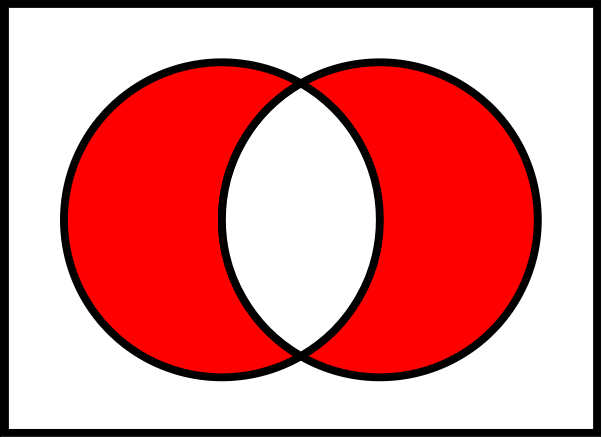
range_diff: calculates difference of all integer sequences from an integer (first key) to an integer (second key). Sort the result in ascending order. Output a space character (' ') after printing an integer. Output a newline character ('\n') after printing the difference. Note: What is the difference between set_difference and set_symmetric_difference? Warning: You must calculate from smaller key to bigger key.
For example,
insert 2 -5 -5 0
insert 3 -5 -5 -5 2 10 0
insert 2 10 3 -5 0
range_diff -8 9
It should output
-5 3 10
For example,
insert 2 -5 -5 0
insert 3 -5 -5 -5 2 10 0
insert 2 10 3 -5 0
range_diff -8 16
It should output
2
For example,
insert 2 -5 -5 0
insert 3 -5 -5 -5 2 10 0
insert 2 10 3 -5 0
range_diff -5 16
It should output
-5 -5
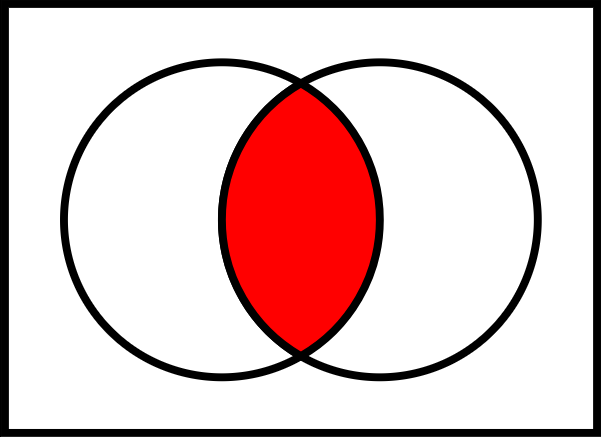
range_inter: calculates intersection of all integer sequences from an integer (first key) to an integer (second key). Sort the result in ascending order. Output a space character (' ') after printing an integer. Output a newline character ('\n') after printing the intersection.
For example,
insert 2 -5 -5 0
insert 3 -5 -5 -5 2 10 0
insert 2 10 3 -5 0
range_inter -8 16
It should output
-5 2
range_out: outputs all integer sequences from an integer (first key) to an integer (second key). Output a space character (' ') after printing an integer. Output a newline character ('\n') after printing all elements of a key. Do not print anything if first key equals to second key.
For example,
insert 2 -5 -5 0
insert 3 9 -1 3 -6 0
insert 7 6 1 2 0
range_out -7 12
It should output
3 9 -1 3 -6
Output
Complete insert, range_diff, range_inter and range_out.