| # | Problem | Pass Rate (passed user / total user) |
|---|---|---|
| 11632 | I2P_EECS_MID1_1 |
|
| 11633 | I2P_EECS_MID1_2 |
|
| 11642 | I2P_EECS_MID1_3 |
|
Description
Now you are in the World of Tanks !!!
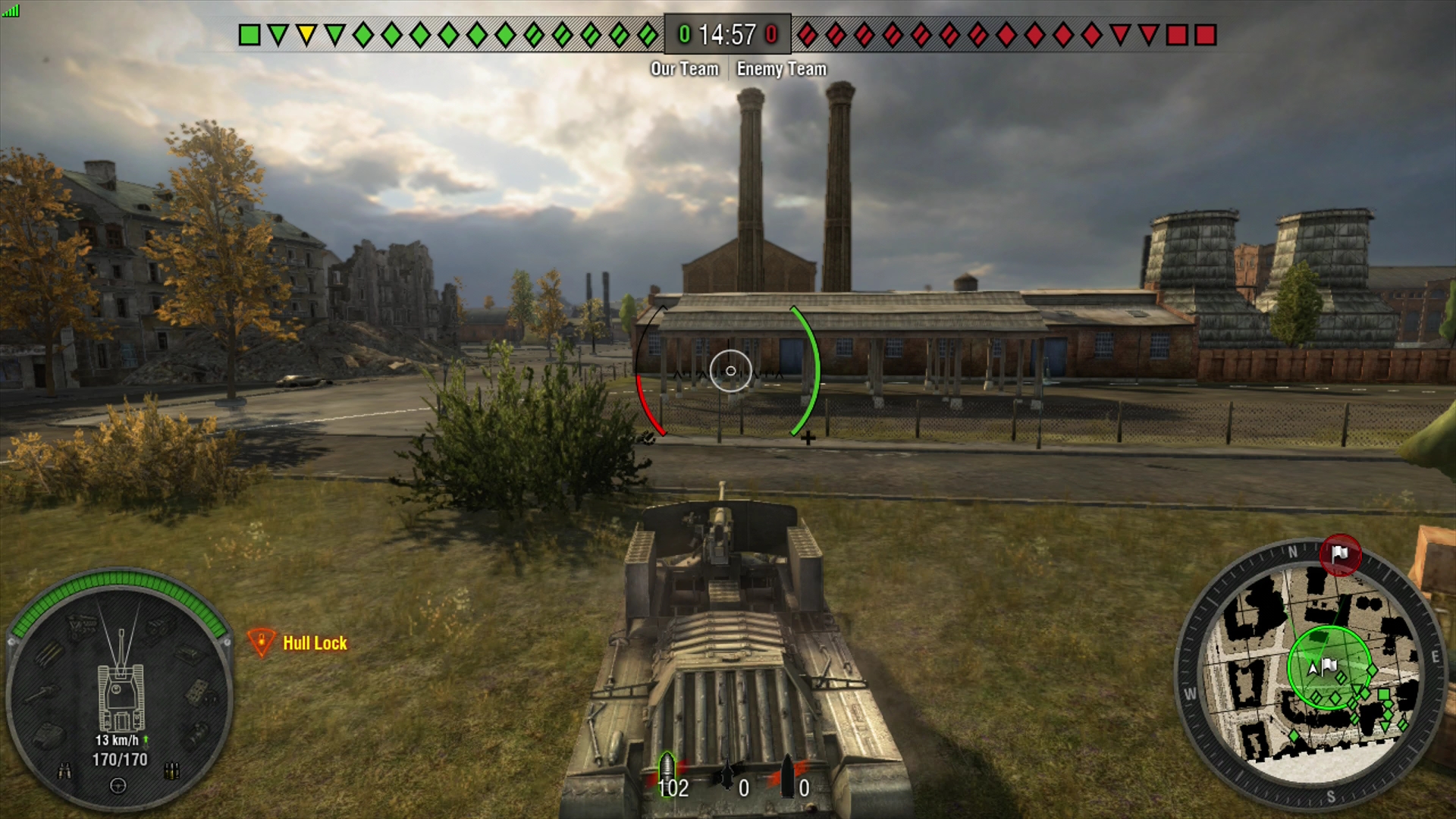
Your mission is to follow the instructions and pick the coins : )
You will get a map of the world like this:
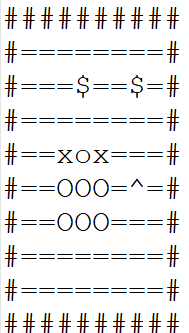
 is your tank with size 3x3 (xox is the head of the tank), and $ represents a coin, # represents the wall, ^ represents the hill.
If your tank (3x3 body) is above the $, you will pick it up ($ can't be counted again). If # or ^ is in front of the tank (in front of the xox, tank's front part), you can not move. Coins' position does not overlap initial tank's position.
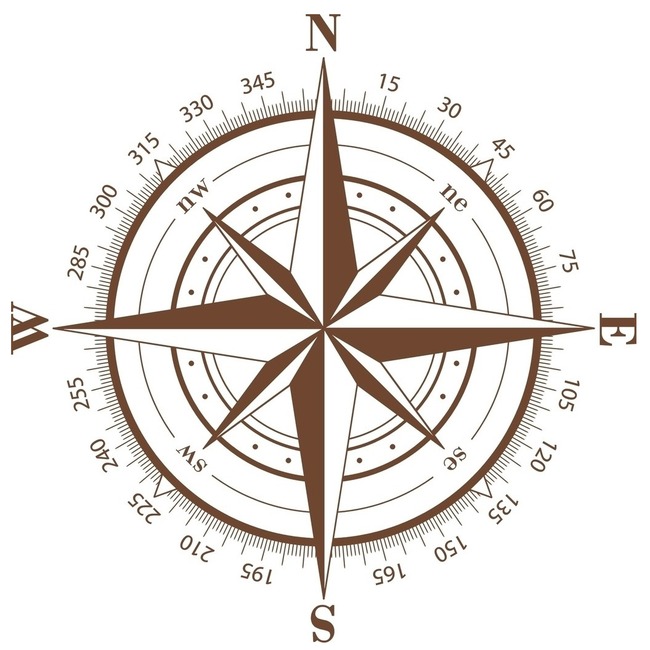
The tank has four forward directions (South, East, North, West). Its direction is where xox heads. Notice that the upper of the map is the North, and the initial direction of the tank is not always North.
And you will receive a sequence of instructions, which contains F (takes a step along the tank's head direction), R (tank's head turns right), and L (tank's head turns left). Instructions like R and L only change tank's head direction, and don't affect the tank's position (would not cause moving).
Your mission is to receive the instructions and drives the tanks in order to collect coins, and report the amount of coins you get in the end.
Notice: The sample input in the below seems not aligned because the size of each character is not identical. You can see the map above (it is the same as sample input) if you want to see clearly.
P.S: Kind professor HT Chen asks TA to give students a code template. You can follow codes below to just finish 5 functions above the main(), and you don't need to change any content in the main(). Or you can decide to write whole codes by yourself, it's up to you :)
Input
The first line of the input contains four things:
1. The rows of the map (0 < rows < 100)
2. The columns of the map (0 < cols < 100)
3. The total length of instructions (0 < instructions's length < 100)
4. The initial tank's direction (N, E, S, W)
The second line is the content of instructions.
For the next lines, they illustrate the map.
Output
The number of coins you get. (printf "\n" in the end)
Sample Input Download
Sample Output Download
Tags
Discuss
Description
Our aspiring and naughty professor HT Chen is so happy to see you guys having solved his "exquisite substring" problem !!
But he found that there was also another special attribute of strings he wrote down.
He found that for any 2 string consisted by '0'to '9' , 'a' to 'z' and 'A' to 'Z', we can find a common longest substring (CLS) of them, which is belongs to the both sequences, continue, left to right, as long as possible and the length of substring might be 1.
For instance, the CLS of "aabbccdd" and "bbaaccdd" is "ccdd".
HT was wondering the length of the CLS for each pair string he wrote on the paper. Counting them by hand will be a dreadful work, so he decided to give it as one of the questions of your midterm. HT would be happy if you both getting your midterm score and solving his problem.
Input
There are multiple lines in each testcase. Every two lines contains a pair of strings that HT wrote on the paper.
The input file is ended by 'EOF'.
It is guaranteed that (s is a arbitrary string in corresponding testcase):
- At most 10 pairs of lines in each testcase.
- testcase #1 ~ #5 : 1 ≤ | s | ≤ 50
- testcase #6 ~ #8 : 50 ≤ | s | ≤ 500
- testcase #9 ~ #10 : 500 ≤ | s | ≤ 1000
For the last 2 testcases, try to recall the method for the bonus testcase of pE we had discussed on Monday.
Or you can try to complete the other 2 questions first then focusing on the 9th & 10th testcases.
Output
For each string pair si, please output a line contains one integer representing the length of CLS in si.
If there is not a CLS, please output 0.
(i.e. Please print '\n' after each answer.)
Sample Input Download
Sample Output Download
Tags
Discuss
Description
After the "common longest substring" problem, it occurred to professor HT Chen that he forgot to set the third problem. It's difficult for HT to give a proper problem at this midterm. Suddenly, he sees a map on the table, and a idea appear in his mind.
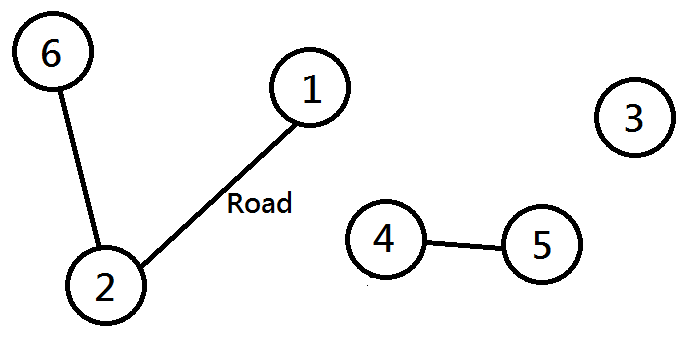
There are some cities on the map, some roads connecting some of them. And, there are only one road between two connected cities, of course, all of the roads are undirected. The figure below is an example of the problem instance. City 1, 6, 2 are connected, and 4, 5 are also connected by the other route. City 3 isn't connected with any other city. Now, HT hopes you guys to find that if there is a route from one city to another one.
Hint. You can use 2-D array to record the road between the city, and use some characters to indicate where the road is. For example, you can use array to store the data, and just modify the data in array then you can get the answer.
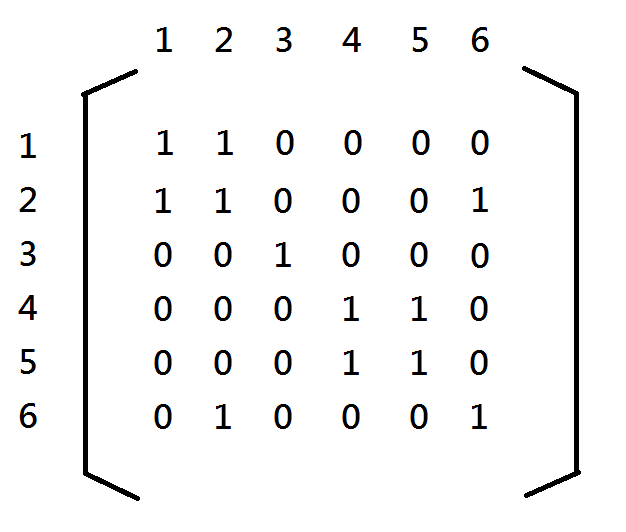

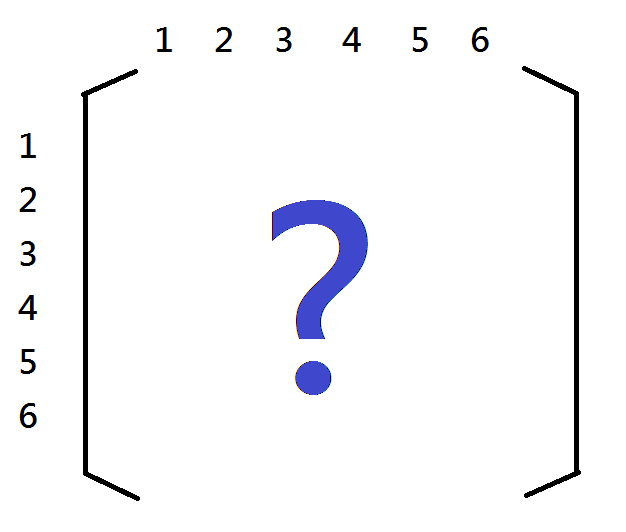
Hint. You can judge that two cities is connected to the same city or not. If so, these three cities may connected together.
Hint. Mutiple for loop might be used in this problem.
You can see the sample code for all the hint.
Input
The first element (called C) of first line is the how many cities on the map. The second element (called N) of first line is the number of road on the map. Each of the next N lines contains two numbers A and B. That means the city A and the city B are connected by one road. And after the first line and N lines, it will be one line that only contains one number T. T is the number of the problem that Jason want to know. So, after T, the next T lines represents the problem. Each of T lines include two numbers X and Y, and you need to print the connection is between city X and city Y or not.
In the end, It is guaranteed that :
- 0 <= C <= 1000
- 0 <= N <= C2
- 0 <= T <= C2
Output
You need to print the connection is between city X and city Y or not. And you need to print '\n' after each answer.