| # | Problem | Pass Rate (passed user / total user) |
|---|---|---|
| 12145 | Species of Knuckles |
|
| 12390 | Construct tree by inorder and preorder |
|
Description
There're different kinds of Knuckles in this world. According to the research, there're 26 different kinds of Knuckles.
Let's denote different kind of Knuckles as 'a' ~ 'z'.
Knuckles is a magic creature.
If you have at least 2 same kind of Knuckles, you can transform these Knuckles into any kind of Knuckles with same number of them.
For example:
if you have n=3 Knuckles representing as "aab" you can transform 'a' Knuckles into 'b' Knuckles. In the end you will get "bbb" Knuckles.
Because you're a deadly Ethnic nationalism, you want all Knuckles to be the same.
You can do the transformation many times.
Find out whether you can do that.
NOTE: Case 6 limits the memory to 1 MB, so try not to declare a large array.
Input
Input contains two lines.
First line contains only one integer n( 1 <= n <= 107 ), representing the number of Knuckles.
Second line contains one string, the length of n.
Output
If you can make all Knuckles the same, output "I'm the god of Knuckles!"
Otherwise, output "Different makes perfect"
Remember to print \n at the end of output
Sample Input Download
Sample Output Download
Tags
Discuss
Description
This problem is partial judge!
We will give you the "inorder" and "preorder" of a tree.
You need to construct a tree by the "inorder" and "preorder" we give you and print the "postorder".
There are three function you need to complete.
Node* buildTree(int *inorder, int *preorder, int *inorder_start, int inorder_end*);
function to construct the tree.
void showPostorder(Node *root)
function to print the postorder
void freeTree(Node *root)
function to free the tree
Notice that the the final testcase has small memory limit. If you don't free your tree you will get memory limit exceeded
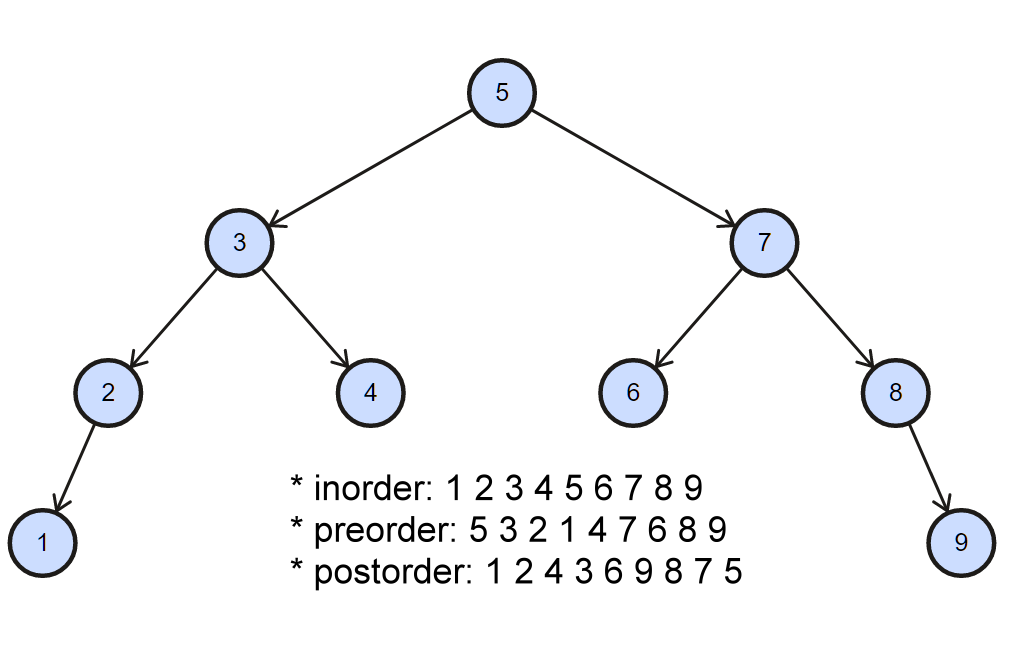
(The tree for sample input 1)
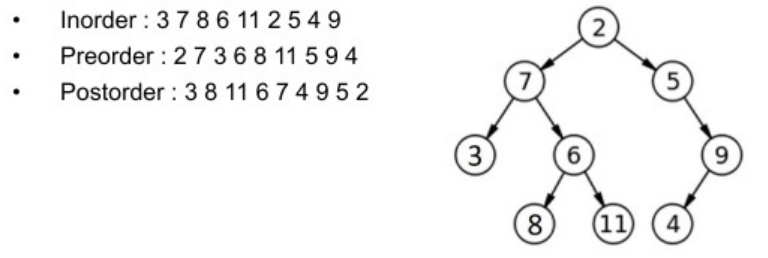
(The tree for sample input 2)
Input
There are multiple testcases. The testcases will end with EOF.
Each testcase contains three lines.
First line only contains one integer n(1 <= n <= 100) which means the number of nodes in the tree.
Second line contains n integers which in the range of int. Standing for the "inorder".
Third line contains n integers which in the range of int. Standing for the "preorder".
It is guarnteed that no same number will appear in one tree.
Output
For each testcase output the "postorder" of the tree.
You have to output in this form:
testcase<id>: <postorder sequence>
Replace <id> and <postorder sequence> into the i-th testcase and the correct postorder sequence.
Each number in postorder sequence should be followed by a single blank(even the last number).
If you have further questions, please refer to sample output.